


Moles / Flat Warts / Age Spots / Skin Tags[Considering Recurrence] Treatment for Sebaceous Hyperplasia and Syringoma
![[Considering Recurrence] Treatment for Sebaceous Hyperplasia and Syringoma](/_next/image?url=https%3A%2F%2Ffirebasestorage.googleapis.com%2Fv0%2Fb%2Fkkeutguro-7e583.firebasestorage.app%2Fo%2Fproducts%252Fsuwon%252Fen%252F1762497834988_e2a25f2f-9ffd-42a9-b615-36c590b8d37d_products2Fguro2Fen2F1758787720198_c2cf1eb0-6635-4798-91f1-9bcdf267f17f_005-copy-1-ezgif.webp%3Falt%3Dmedia%26token%3Dfb96f3f3-14a4-47a4-b38b-e254a2ab941c&w=2048&q=75)
[Considering Recurrence] Treatment for Sebaceous Hyperplasia and Syringoma
Precisely removed with Agnes + (Erbium or CO2) combination therapy, also considering the possibility of recurrence. *VAT not included
Options
Treatment Details







Approach for Effective Recurrence Management of Sebaceous Hyperplasia
If sebaceous hyperplasia is treated only by addressing surface lesions, internal causes may remain.
Sebaceous hyperplasia is characterized by abnormally enlarged or increased sebaceous glands within the dermis.
However, commonly performed procedures often involve only laser removal of visible surface lesions.
While this approach may appear to offer short-term improvement,
the sebaceous glands themselves are not removed, leading to a possibility of lesion recurrence.
Our medical team approaches this issue differently.
We focus on reducing the likelihood of recurrence by addressing the underlying internal causes in addition to removing visible lesions.
Our goal extends beyond mere symptom relief.
We pursue an integrated treatment plan that can improve both the causes and symptoms simultaneously.
To achieve this approach, we combine and utilize two main devices.
1. Potenza Needle RF (Insulated 1-pin Radiofrequency Needle)
By directly delivering radiofrequency energy to the area where sebaceous glands are located,
it selectively damages the sebaceous glands to regulate their function.
Using an insulated micro-needle, it minimizes damage to the epidermis or adjacent tissues,
and precisely targets only the sebaceous glands for treatment.
This plays a crucial role in addressing the root cause of sebaceous hyperplasia.
2. Erbium YAG Laser (Er:YAG)
This laser allows for precise ablation,
and is used to meticulously refine and remove lesions protruding externally.
Damage to surrounding tissues is relatively minimal, which reduces recovery burden and can lower the possibility of scarring.
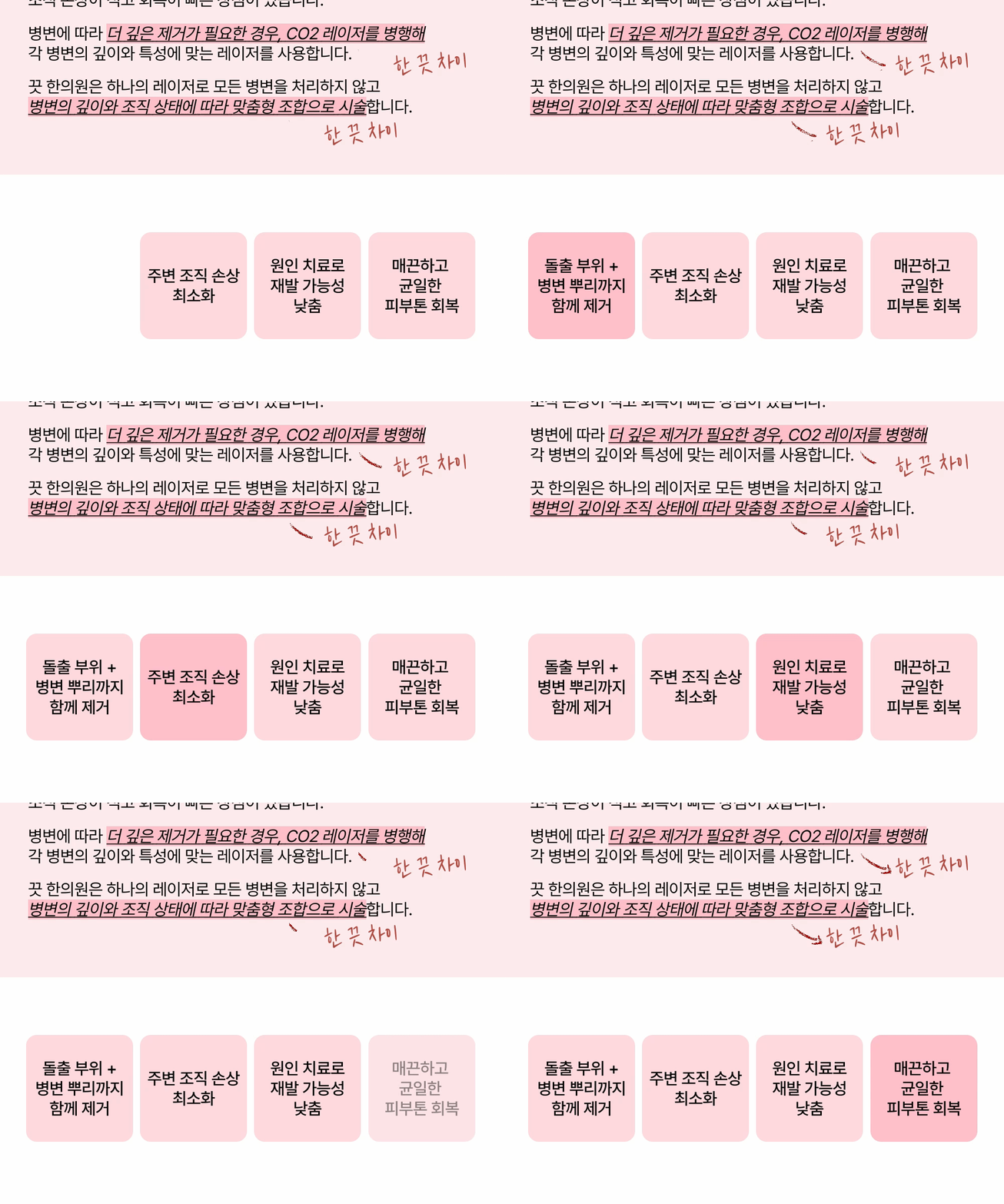
In some cases, a CO2 laser can be used in conjunction to enhance accessibility to deeper lesions.
This differs from typical surface removal procedures.
CO2 laser monotherapy primarily removes only the surface, allowing sebaceous gland tissue to remain internally and potentially recur.
Our combined treatment can help reduce recurrence by regulating the sebaceous glands themselves and tidying up surface lesions.
Key Characteristics of Sebaceous Hyperplasia
Sebaceous Hyperplasia
Procedures that only address the surface may not be sufficient.
Managing both surface lesions and internal causes simultaneously can contribute to lowering the likelihood of recurrence.
Are you experiencing any of the following symptoms?
Small, round bumps are observed on the forehead, cheeks, and around the nose.
The center of the lesion typically shows an umbilical-like depression.
Occasionally, they may resemble pimples, but they are not easily extracted.
They tend to remain unchanged for a long time or increase in number over time.
These phenomena are not simply skin troubles or blemishes,
but should be considered as potentially being *sebaceous hyperplasia (Sebaceous Hyperplasia)*, which occurs due to excessive proliferation of sebaceous glands.
시술 과정 안내
첫 상담부터 마무리까지의 실제 진행 순서를 확인하세요.
- 01
먼저 의료진이 고객의 피부 상태와 병변의 특성을 면밀히 진단하고, 이를 바탕으로 맞춤 시술 계획을 세웁니다. 이후 아그네스 레이저와 어븀 또는 CO2 레이저 중 가장 적합한 방식을 선택하여 섬세하게 병변을 다루며, 시술 후에는 피부 진정 및 재생 관리를 진행합니다.
Q&A
고객님들이 가장 많이 물어보시는 내용을 모았습니다.
What are sebaceous hyperplasia and syringoma, and why do they occur?

Sebaceous hyperplasia is a benign skin tumor caused by abnormally enlarged sebaceous glands. It typically appears as small yellowish or flesh-colored bumps on the face. Syringoma is a benign tumor originating from sweat glands, tending to appear as small, bumpy lesions around the eyes or on the forehead. The exact causes of both conditions are not yet clearly understood. Genetic factors, individual skin characteristics, and aging are believed to be related.